...

Lighting Projects & Places

Whether it’s a new build, renovation, extension or simply upgrading existing lighting, every project requires an individual approach to bring out the best features in a home.

Key to success is understanding the principles of Architectural Lighting, which is the term for using light to highlight or enhance features or shapes in a room or space. The aim is to hide the light source so you just see the effect, and done well makes people feel there’s something special about the room without really knowing why.

Have a look through examples of Cat Lighting work to see how architectural lighting transforms living spaces.

Cat Lighting Show House

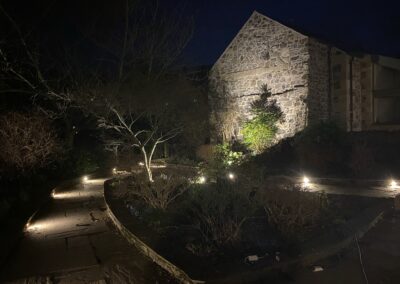
I started my lighting design career when we restored an ancient stone barn in 2018. Seeing the opportunity to try out some interior design ideas, I used the building to explore and develop lighting techniques – from where my love affair with lighting was born.

Hall lighting

The need for good hall lighting is easy to ignore on the basis that you won’t be spending much time in there, but actually it’s really important in affecting how you feel when you arrive home. It’s not unusual to stagger in and fumble for a light switch that brings on a dull overhead pendant light that doesn’t help much in leading you in, or a raft of over-bright downlights that make your eyes wince as you enter – but well designed hall lighting will completely change your welcome experience.

Kitchen Lighting

As kitchens become increasingly multi-functional, taking professional advice on how to light your kitchen has probably never been more important. Planning is now about what light is needed for each different activity – cooking, eating, sitting, family life, entertaining – and how to ensure it’s functional, attractive and just where and how you want it.

Bathrooms

Bathroom lighting has seen some of the biggest developments in the past few years, largely due to fittings becoming smaller and more waterproof which allow much more imaginative lighting design. Like any other room it’s important to think of a bathroom as a series of ‘zones,’ each needing their own lighting treatments according to their function – shower, WC, shaving/makeup, towel drying and hooks to hang things on. Lighting brings relaxation and character, moving the bathroom on from a functional, bland environment to somewhere to properly enjoy.

Living Room Lighting

Living room lighting is all about calm and relaxation and is best achieved by ensuring that there is a source of light coming from each side of the room to avoid dependence on glary downlights. Use it to highlight architectural features, pictures and shelves which in themselves create atmosphere and interest and combine to create comfortable layers of light around the room.

Office Lighting

“Never hunch in the dark over a laptop.”

As more of us work from home, home office lighting is a top priority for many people. Office lighting needs to be balanced, functional and enjoyed, so a well designed lighting scheme is essential.

Conservatory Lighting

With high ceilings and a lot of glass, conservatories can sometimes be awkward to light. You need to ensure there’s enough of the right kind of light for both mood and function, while minimising glare and reflection. Uplighting is a major option, taking light up to the ceiling which then reflects back down as diffused ambient light, recessed into windowsills and floors and angled towards apex ceilings.

Garden Lighting

The first rule of garden lighting is less is more – rather than flooding your outside space, carefully choose things to light and look at how to achieve subtle effects using nature. Concealed uplights under trees, low bollards around patios, discreetly recessed marker lights along paths and steps and uplighting walls all contribute to a classy, understated look to admire and enjoy.

Call Now Button Seraphinite AcceleratorOptimized by Seraphinite Accelerator
Turns on site high speed to be attractive for people and search engines.